In this blog, I share my own reflections and vision for teaching mathematics through PBL, which are often inspired by conversations and questions from fellow educators. Below, you will find a table of contents for the blog (also note that each blog post starts with an image).
- Curiosity as a Practice: Making Space for Wonder in the Classroom
- Bridging Project-Based Learning and Test Prep: Two Approaches
- Reimagining Grading, Remediation, and Joy in the High School Math Classroom
- Rethinking Grading: Reflections from a Returning Classroom Teacher
- Cheating Is Not the Problem
- Changing the Work Done in Class
- Grades and Feedback Are Not the Same Thing
Curiosity as a Practice: Making Space for Wonder in the Classroom

November 11, 2022 (updated 1/11/2026)
Being curious is a skill that we all have, we all want, and we do not always remember to use. The invention of Google allowed curiosity to flourish. No longer do we have to trek to the library for encyclopedias or other reading materials in order to learn about a subject. No longer do we need to find more knowledgeable others to share what they know with us when curiosity strikes. And curiosity goes beyond finding answers to random or relevant questions on Google. We can explore, read, watch videos, try things out, imagine, and discuss. There are all sorts of ways to be curious.
Unfortunately, as teachers, we often do not give our students, or ourselves, enough space to simply be curious. When we introduce students to new things, they naturally want to explore them. Sometimes this even drives teachers a little crazy. “Don’t look ahead! Don’t play around in here!” are messages that many students have probably heard before. But why? When exposed to a new tool, new ideas, or new concepts, it is completely natural to want to play around and see if you can figure things out. It is natural to want to check what is coming before digging deeply into what the task is asking. Sometimes teachers even struggle with students asking questions. I once had a teacher in high school who answered many of our questions with, “Hmm, that’s a good question,” and then walked away, never answering it or helping us find an answer.
Maybe that is part of what is going on. Some people are uncomfortable with curiosity. They might be afraid of what they will find. After all, there is a common saying that warns us, “curiosity killed the cat.” Maybe people are comfortable with curiosity in some situations, but less comfortable in others. For example, an algebra teacher might feel very comfortable being curious when faced with an algebra problem, but less interested in exploring a geometry problem. Or maybe it is the opposite. She might enjoy exercising her curiosity with geometry because it is not something she is expected to know well, but feel less comfortable being curious in algebra, her area of expertise, because it exposes the possibility of being wrong or not knowing everything.
It is also reasonable for teachers to feel uncomfortable not knowing the answers to students’ questions if they are working in environments where that is not acceptable. I have personally experienced this. Being comfortable with uncertainty and choosing to explore student curiosity together once resulted in me being called into the principal’s office. That experience made it clear that, in some spaces, teachers are expected to have all the answers at all times. While this expectation is unrealistic, it is also not uncommon, and it can create fear around curiosity for both teachers and students.
Once teachers are willing and supported in accepting that they do not know everything, the world opens up to exciting opportunities. It creates space for students to share their experiences and expertise, and for teachers and students to co-construct learning together. It also allows teachers and students to learn about one another as people. Curiosity does not have to be only about content, but about each other as well. Just be careful not to let curiosity turn into nosiness.
Many of the so-called 21st century skills can be traced back to the practice of being curious. It becomes easier to think critically, because curiosity inspires questions and investigations into what we read and hear. It becomes easier to actively listen, because wanting to learn more about someone requires listening for the purpose of understanding. Curiosity can also inspire creativity. Learning more about things we do not yet know exposes us to ideas we may not have encountered before, which can spark new ways of thinking and imagining.
Bridging Project-Based Learning and Test Prep: Two Approaches

July 3, 2025
One of the most common questions I get about project-based learning (PBL) is this:
How do you prepare students for traditional tests while staying true to the spirit of PBL?
It’s a great question. There’s often a tension between the authentic, hands-on learning we strive for in a PBL classroom and the more rigid demands of standardized assessments. Over time, I’ve found two main approaches that can help bridge that gap. Neither is perfect, but both offer useful pathways for helping students transfer their learning into test situations.
1. The Real-Life Parallel Approach: Driving Tests and Learning Transfer
This approach is based on the idea that classroom experiences should resemble daily life experiences, similar to the conversation we were having at your house about consequences for actions at home. There are times in life when people have to take a sit-down test to achieve something, such as getting a driver’s license, earning a professional license, or applying to graduate school. This does not happen very often, and it looks quite different from day-to-day life, but it does exist.
In these cases, the majority of the learning that prepares someone for the test is related to the task they will actually be doing once they achieve the goal. For example, preparing to get a driver’s license mostly involves actually driving a car. People practice highway driving, parking, navigating tight roads, backing up, parallel parking, driving in neighborhoods, busy areas, and places where it is easy to go too fast. They learn to recognize signs and understand what they mean. Just before the test, maybe a week or two leading up to it, they also study the handbook to make sure they know the answers to the written questions.
You do not really practice those written questions every day, nor is it the case that you will be answering questions about driving very often after you get your license. But it is a necessary hoop to jump through, so some time is spent preparing for it. In many ways, the experiences out in the driver’s seat should prepare you to answer those questions, but transferring that experience-based knowledge into a test context is not always easy, as you were rightly pointing out about math. Because of that, we prepare specifically for the testing context.
In a PBL math class, the same idea can apply. Students spend most of their time learning mathematics through experiences that resemble how people actually use math outside of school. Then, as a big assessment approaches, you build in very targeted practice for that specific context. This helps students make connections between all of their rich experiences with the mathematics and what they are seeing in the test questions. Personally, this is my preference. The mathematics we want students doing today, especially given that computers can handle computation far better than humans, is much more about problem solving and modeling within constraints than it is about executing procedures. That kind of mathematics fits naturally with this approach. I have even done this preparatory practice as a project, where students create test-style practice problems, provide feedback on one another’s work, and then complete everyone else’s creations. This helped me stay aligned with the PBL orientation of my school.
2. The Drill and Scrimmage Approach: Borrowing from Sports and Music
The second approach comes from a sports or music philosophy. When learning a sport, small but important skills are often practiced through drills. These drills involve repetition of key skills that, when combined, contribute to strong performance. However, everyone knows that practicing drills alone is not enough to be good at the game. Athletes also need opportunities to put everything together. That is why teams do scrimmages. Sometimes these are against teammates, which is helpful, but it is usually even better to play against another team.
Often, the most powerful practice happens during actual competition, where pressure is layered in. Even scrimmages do not fully replicate that experience. Throughout a season, teams learn from their games and improve, so games often function as formative assessments. They only become truly summative at the very end of the season, when there are no more opportunities to learn and improve before the final outcome. Even then, teams often reflect on what they want to work on for the next season.
This analogy is not perfect, because sports assessments involve applying skills in a game scenario rather than recalling information in a testing context. Still, if you prefer this approach, building in short and regular test-prep opportunities can help. Daily or weekly ten-minute drills focused on test-type problems can help students build the muscle of transferring their knowledge without letting test preparation take over the entire class experience.
Ultimately, both approaches recognize that transfer doesn’t just happen. Students need support in recognizing how their learning connects across different contexts. Whether you choose a “real-life test” model or a “drills and scrimmage” one (or some hybrid of the two) what matters most is that students feel confident, capable, and curious as they face new challenges. And that we, as teachers, remember: preparing for a test doesn’t mean we have to abandon authenticity. We just need to be thoughtful about how we help students bridge that gap.
Reimagining Grading, Remediation, and Joy in the High School Math Classroom
June 11, 2025
Over the past few months, I’ve had the chance to connect with a fellow educator who, like many of us, is living the highs and lows of teaching high school math. What started as a simple email exchange slowly turned into a much deeper conversation about some of the challenges we are both seeing in classrooms right now, especially around grading, remediation, student engagement, and what our role as math educators even is anymore.
While we talked about a lot of different things, three reflections kept coming up again and again.
1. Grading Is Driving the Learning, Not the Other Way Around
In many competitive school environments, it is becoming harder and harder to get students to engage in meaningful learning unless there is a grade attached to it. Students are stretched thin. They are juggling classes, extracurriculars, resume-building activities, and the constant pull of technology. In the midst of all that, the joy of learning, especially in math, often gets pushed aside.
What is interesting is that many students are aware of this. Some even choose to explore it through class projects or writing assignments. But awareness alone does not create change, particularly in systems where performance is prioritized and curiosity feels like a luxury.
This is where grading practices really matter. I often point teachers toward Grading for Equity by Joe Feldman and Mathematics for Human Flourishing by Francis Su. Feldman offers a clear critique of traditional grading systems and practical ways to make grading more equitable and aligned with learning. Su’s book is something different. It is a reminder that mathematics is a deeply human endeavor and that learning can be joyful, purposeful, and connected to who students are.
In practice, one small shift that can make a big difference is emphasizing feedback before grades. Something as simple as delaying the release of a numerical grade until students have had time to read and respond to feedback can refocus attention on learning. When students are given space to revise and reflect before seeing a score, they are more likely to engage with the feedback in a meaningful way.
2. Remediation Without Mastery Is a Leaky Pipeline
Another major theme in our conversation was remediation and accountability. Many high school teachers are expected to offer test corrections, retakes, or other forms of recovery. In theory, these structures are meant to support learning. In practice, they often fall short.
Too often, students repeat assessments without addressing the underlying misunderstandings. Corrections become surface-level, focused on fixing answers rather than building understanding. This is rarely about students not caring. More often, they lack the study strategies, metacognitive tools, or confidence needed to actually relearn the material.
Some approaches that can help shift remediation toward mastery include:
- Building in live feedback during assessments, presentations, or work time instead of waiting until the end.
- Using self-assessment and peer feedback routines like Glow and Grow or Rose, Bud, Thorn to normalize reflection and revision.
- Inviting outside voices into the process. This might include community members, professionals, or older students who can give feedback and ask questions that feel different from those a teacher asks.
That last piece has been especially powerful. When students know their ideas will be seen and taken seriously by someone beyond their teacher, their level of investment often changes. Whether it is a practice pitch, an informal expert conversation, or a public showcase, authentic audiences tend to raise accountability in ways that retakes alone rarely do.
3. Low-Lift, High-Impact Strategies Matter for Sustainability
Every teacher knows that energy is limited. While personalized learning plans and intensive one-on-one support sound great in theory, they are not always realistic. If we want change to stick, we need strategies that are both effective and sustainable.
Some of my favorite low-lift approaches include:
- Visual rubrics or “bump-it-up” walls adapted from elementary literacy classrooms.
- Annotating rubrics live during work time so feedback happens in real time and grading does not all happen after school.
- Using feedback-rich technology tools like Desmos or GeoGebra, where students can immediately see whether their mathematical thinking makes sense. For example, comparing graphs of original and factored equations allows students to check their work and build intuition without constant teacher intervention.
These kinds of strategies support student growth while also protecting teacher capacity, which is something we have to take seriously if we want this profession to be sustainable.
This entire conversation started with one honest reflection from a teacher: “I feel really ineffective in reaching the students that do test recovery over and over again.” That feeling is deeply familiar to many of us. But within that frustration is also an opportunity. If we want classrooms where students find joy in math, take ownership of their learning, and recover with understanding rather than just points, we have to be willing to ask hard questions, try small changes, and lean on each other along the way.
Cheating Is Not the Problem

March 10, 2022
If students are cheating, the issue isn’t with them, rather it’s with the work we’re asking them to do.
Cheating isn’t the problem. It’s a symptom. A warning sign. When students are searching online for answers, copying from a friend, or outsourcing their homework to an app or AI tool, they’re telling us something important: the work isn’t meaningful, relevant, or designed for the world we actually live in.
We’re Teaching in the Fourth Industrial Revolution
We live in the information age, or as my colleague Ben Owens from Open Way Learning calls it, the Fourth Industrial Revolution. Our students carry around pocket-sized supercomputers that can instantly search databases, solve equations with a photo, and identify music in seconds. Information is no longer a scarce resource. So why are we still treating it like one?
In today’s world, memorizing facts and procedures just isn’t essential anymore. Sure, it can be convenient to recall information quickly, but most data, processes, and formulas are accessible 24/7. Our students know this. So when we ask them to do tasks that rely on memorization or rote calculation, they naturally ask: Why wouldn’t I just look it up? And honestly—why wouldn’t they?
The Skills That Actually Matter
Instead of focusing on fact recall, we should be helping students learn how to navigate a world flooded with information where some of it is misleading, biased, or simply wrong. They need to be able to analyze data, detect misinformation, think critically, collaborate effectively, and solve real problems. These are the skills required not just for “21st century careers,” but for participating in society and shaping the future.
Unfortunately, much of what happens in classrooms still looks like it did before the internet. Too often, assignments are designed to test memory, not thinking. Students are expected to produce answers quickly and independently, with little room for creativity, collaboration, or nuance.
If we want students to stop cheating, we have to give them work that makes cheating irrelevant. When tasks are genuinely interesting, challenging, and grounded in real life, students are far more likely to engage authentically.
What That Looks Like in Math Class
Math, in particular, has a reputation for being disconnected from students’ lives. But it doesn’t have to be. There’s a growing movement toward project-based and problem-based learning, where students take on real-world challenges that require mathematical thinking, not just correct answers.
Organizations like PBLWorks and HQPBL offer frameworks for this kind of learning. The Design & Pitch Challenges in STEM provide math-infused entrepreneurial projects. Marilyn Frankenstein’s work explores how mathematics can be used to understand and challenge social injustice. In these spaces, math is about meaning—about modeling, questioning, and making decisions—not just calculating.
When students are solving messy problems that matter, collaborating with peers, and being asked to explain their reasoning, the idea of “cheating” begins to fade. Instead of chasing the right answer, they’re building understanding and agency.
The Real Challenge for Educators
If we’re serious about addressing cheating, we have to be serious about transforming what we ask students to do. That means shifting away from low-level recall tasks and toward work that encourages thinking, exploration, and meaningful dialogue.
It means asking ourselves:
- Does this task reflect how math is used in the real world?
- Will students see value in doing this beyond getting a grade?
- Are we assessing what really matters or just what’s easiest to grade?
When students believe their ideas matter, when they see how their learning connects to their lives and the world around them, and when they’re supported in a community of thinkers—they don’t need to cheat. They want to learn.
Let’s stop blaming students for doing what the system has trained them to do (e.g., chase answers) and start reimagining a system that values thoughtfulness, creativity, and real understanding.
Cheating is not the problem. Irrelevant, outdated, and disconnected instruction is.
Changing the Work Done in Class
July 13, 2021
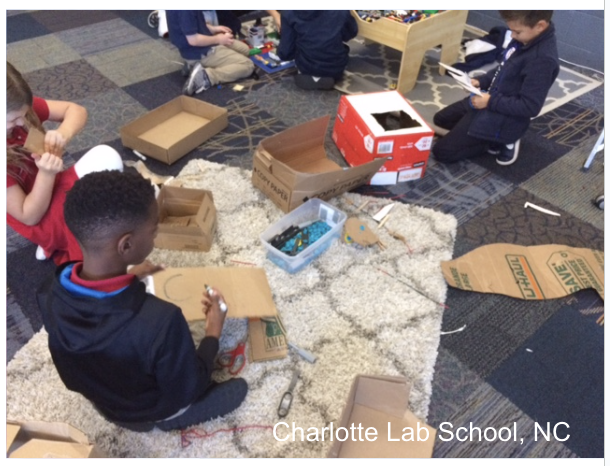
One of the most common misconceptions about project-based learning (PBL) is that it is extra, something layered on top of the regular curriculum. But that is not the intention at all. PBL is not in addition to traditional day-to-day work; it is a redesign of what the day-to-day work actually is.
Yes, there is still space for more traditional tasks, such as quick practice activities, short skills reviews, or fluency building, but they exist to support the needs of the project and the mathematical goals, not separate from them. The shift is not about doing more work. It is about doing different work that is more connected, meaningful, and student-driven. Students should not feel like they are being buried in tasks, and teachers should not feel like they are constantly adding more to their plates. Once past the initial learning curve, this redesign can make class time feel more focused and purposeful.
And speaking of time, if students are making good use of their class periods by collaborating, thinking, and making progress, there should be no reason to assign homework. The model is intended to reflect real-life work culture. When people do their jobs during work hours, they go home and focus on their lives. Homework only enters the equation if class time is misused or missed.
The teacher’s role shifts significantly as well. In a PBL classroom, teachers are not just delivering instruction. They are moving throughout the room, listening closely, asking questions, connecting students with one another, and identifying key ideas or strategies that need to be shared with the whole group. As Jansen (2020) notes in Rough Draft Math, sometimes this means pausing the class to elevate a rough-draft idea and make it public. Other times it means noticing misconceptions and leading a short workshop or launching a focused practice activity using tools like Desmos.
This time can also be used to collect formative evidence. My colleague Ben Owens used MasteryConnect on an iPad to input student progress in real time based on what he observed in conversations and group work. Students would get a notification when their progress on a standard shifted. An upward bump felt like a win, while a dip became a motivator to revisit and relearn. Students could also self-advocate during this time by requesting a chance to show what they know. Teachers need to be ready with creative ways for students to demonstrate understanding, whether that means teaching a peer, sitting down for a quick conference, recording a tutorial video, or leading a mini-lesson for the teacher.
When I advocate for PBL, I often hear concern from students, teachers, and families. Won’t this just mean more work? But that question misses the point. PBL is not a pile-on. It is a rethinking of how we use time and how we engage with learning. It is work that feels real. It is work that brings out student voice, ownership, and motivation. And most importantly, it is work worth doing.
Grades and Feedback Are Not the Same Thing

Learning relies on feedback, and feedback can come in many forms. In a mathematics classroom, for example, one powerful type of feedback comes from using multiple representations. Students might graph an equation in Desmos, create a table of values, or compare representations to check whether their thinking makes sense. (Side note: while these representations can certainly be created by hand, using technology is often faster and helps ensure accuracy for students who may struggle with computation.)
Students can also receive feedback through answer keys, by comparing their work with peers, through whole-class discussions where the teacher reveals and analyzes solutions, or through teacher comments as the instructor circulates the room. Dynamic technology tools such as Amplify, GeoGebra, CODAP, and Desmos provide immediate, responsive feedback as students explore ideas. Written comments on submitted work are another common form. In project-based learning environments, feedback can come from testing prototypes or engaging with outside experts who meet with students and respond to their ideas. There are many ways to embed feedback into a classroom experience, and feedback is essential to the learning process.
Grades are a form of feedback, yes, but they are not the only kind that should exist in a school. In fact, if the goal is to create a learning culture where students feel safe making mistakes and growing together, grades should be one of the least frequently used forms of feedback. Here’s why. Grades function as judgments. They are evaluations, stamps of approval or disapproval. For many students, grades are a primary source of stress and anxiety. They can turn confident learners, who are otherwise willing to try new ideas, into students who are afraid to take risks.
Grading everything all the time is like asking someone to keep trying new things while also expecting perfection in areas they are still learning. That’s unrealistic. Imagine if every skill you were developing in life had to be demonstrated in front of an interview committee deciding whether you deserved a job. That level of scrutiny creates nerves and fear because interviews are designed for judgment. While that makes sense in limited situations, most people would not do their best work if they had to operate under constant evaluation. Ask anyone who is being micromanaged at work. They will likely tell you they are not performing as well as they could because they live under the fear of judgment for every move they make. This is exactly what we do to students when we grade their every step throughout the learning process.
I believe grades should be used exclusively to measure competence on a learning goal, whether through mastery-based or standards-based grading. Grades should be able to change as competence improves, and they should be recorded at natural points in the learning process, when students are reasonably likely to have achieved mastery. For students who have not yet mastered a goal, there should be opportunities to improve. Later assessments, such as cumulative or spiraled exams, should be able to replace earlier evidence of learning with newer demonstrations of growth.
I have read Grading for Equity and its critiques, and I have spoken with experts about competency-based grading. I am currently attempting to grade with these practices in mind. While I agree with critics that there are practical challenges to implementing these systems and that some structure, such as timed assessments, is often necessary, I believe these approaches are ultimately better for students and for teachers.
 Authenticimatics